How Dumbledore Defeated Grindelwald
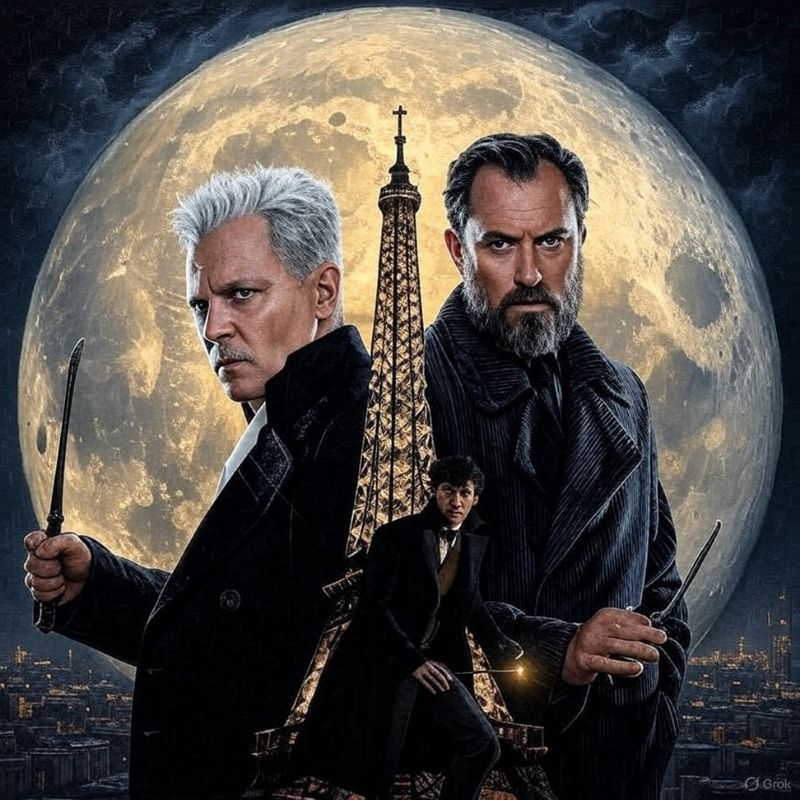
The Rise of Grindelwald
How Dumbledore Defeated Grindelwald is a tale deeply rooted in the history of magic and one that begins with the rise of Gellert Grindelwald. Born in the late 19th century, Grindelwald was recognized early on for his exceptional magical prowess. As a student at Durmstrang Institute, he displayed not only an aptitude for spellcasting but also a dangerous curiosity for the Dark Arts. His expulsion from Durmstrang for twisted experiments did little to curb his ambitions.
Grindelwald’s vision for a new world order was centered around the concept of wizard supremacy. He dreamed of a society where wizards would no longer hide in the shadows, subjugated by Muggle society. This vision was deeply intertwined with his obsession with the Deathly Hallows, three powerful magical objects that he believed would grant him the power to defeat death and establish his rule. His pursuit of the Hallows was relentless, and he was convinced that with their power, he could bring about his revolution.
Grindelwald’s charisma and formidable magical skills allowed him to amass a significant following. He formed a global movement that posed a severe threat to the peace and stability of the wizarding world. His followers, known as Grindelwald’s Acolytes, spread his ideology and executed his plans across Europe. This movement was not just about power but also about reshaping the world according to Grindelwald’s vision.
The key events leading up to Grindelwald’s peak of power were marked by strategic conquests and alliances. Grindelwald’s influence rapidly spread throughout Eastern and Central Europe. He utilized propaganda and fear to bring wizarding communities under his control. The turning point came with his establishment of a stronghold in Nurmengard, a fortress he built to house his enemies and those who opposed his ideology.
Dumbledore’s Early Relationship with Grindelwald
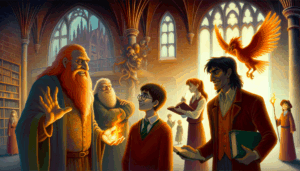
Dumbledore and Grindelwald first crossed paths in the summer of 1899, in the village of Godric’s Hollow. At the time, both were young, ambitious, and eager to change the world. Their meeting was serendipitous, sparked by a shared interest in magic and the Hallows. The bond between them was immediate, and they quickly became close friends.
During their youthful friendship, Dumbledore and Grindelwald shared a vision for a new world order. They dreamed of a society where wizards would not have to hide but would instead lead. This vision was encapsulated in the phrase “For the Greater Good,” a motto that drove their early discussions and plans. They envisioned a world where wizards would guide the non-magical community for the betterment of all.
However, their friendship was marred by tragedy. The tragic events of Ariana Dumbledore’s death were a turning point in their relationship. A fierce argument broke out between Dumbledore, Grindelwald, and Aberforth Dumbledore, Albus’s brother. The confrontation escalated into a duel, during which Ariana, who was a troubled and delicate girl, was accidentally killed. The guilt and grief over Ariana’s death drove a wedge between Dumbledore and Grindelwald, and Grindelwald fled.
The ideological rift between them eventually became insurmountable. Dumbledore, haunted by the implications of their plans and the tragedy that had occurred, began to see the flaws in their youthful ideals. He realized that Grindelwald’s vision was rooted in tyranny and oppression, while he valued freedom and equality. This divergence in beliefs set them on a path that would lead to confrontation.
The Legendary Duel of 1945
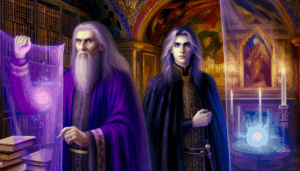
The duel between Dumbledore and Grindelwald in 1945 is a legendary event in the wizarding world, often cited as one of the most significant battles of magical history. The duel was not just a personal confrontation but a clash of ideologies and visions for the future of the wizarding world. The stakes were high, as Grindelwald’s defeat could mean the end of his dark reign and the possibility of peace.
The confrontation took place at Grindelwald’s fortress, Nurmengard. The setting was both strategic and symbolic, as Nurmengard had been the epicenter of Grindelwald’s power. The duel was witnessed by few but had far-reaching implications for the wizarding community. It was a battle of wits, skill, and sheer magical prowess.
Tactical spells and magical skill were pivotal during the duel. Both Dumbledore and Grindelwald were exceptionally talented wizards, capable of casting spells of great complexity and power. They employed a combination of offensive and defensive magic, with Dumbledore using his deep understanding of magic to counter Grindelwald’s aggressive tactics. The duel showcased their mastery over transfiguration, charms, and curses.
The outcome of the duel was a decisive victory for Dumbledore. Grindelwald was disarmed and captured, his ambitions thwarted. The impact on the wizarding community was profound. Grindelwald’s defeat marked the end of his reign of terror and brought about a sense of relief and hope. Dumbledore’s victory was celebrated as a triumph of good over evil, justice over tyranny.
Aftermath and Impact on the Wizarding World
Following his defeat, Grindelwald was captured and imprisoned in Nurmengard, the very fortress he had built as a symbol of his power. His imprisonment marked the end of an era and the beginning of a new chapter for the wizarding world. The fear that had gripped the magical community began to dissipate, and a sense of normalcy gradually returned.
The changes in wizarding society post-duel were significant. The international wizarding community, having witnessed the destructive potential of Grindelwald’s ideology, became more vigilant in preventing the rise of future dark forces. Laws were enacted to safeguard against the misuse of magic, and efforts were made to promote unity and understanding among magical and non-magical communities alike.
Dumbledore’s rise to prominence and leadership was a natural consequence of his victory. His wisdom, compassion, and strength in the face of adversity earned him respect and admiration. He became a guiding force within the wizarding community, eventually assuming the role of Headmaster of Hogwarts, where he shaped the minds of future generations of witches and wizards.
The influence of Dumbledore’s triumph extended to future conflicts and dark wizards. His moral compass and unwavering commitment to justice served as a beacon for those who fought against evil. The lessons learned from his battle with Grindelwald became a source of inspiration for many, including those who would later stand against Lord Voldemort and other dark forces.
Lessons Learned from Dumbledore’s Victory
The story of how Dumbledore defeated Grindelwald is a testament to the importance of courage and standing up against tyranny. Dumbledore’s willingness to confront his fears and face an old friend in battle demonstrated that courage is essential in the fight against oppression. His actions remind us that standing up for what is right often requires personal sacrifice and unwavering resolve.
The power of forgiveness and understanding past mistakes is another crucial lesson from Dumbledore’s journey. Despite the deep scars left by his past with Grindelwald, Dumbledore managed to learn from his mistakes and grow as a leader. His ability to forgive himself allowed him to move forward and serve the greater good, a powerful example for all.
The role of love and loyalty in overcoming darkness is a recurring theme in Dumbledore’s life. His relationships with those he cared about, and his unwavering belief in the power of love, were instrumental in his victory. Dumbledore’s commitment to his ideals and the people he loved fueled his determination to defeat Grindelwald and restore peace.
Wisdom in Dumbledore’s leadership and legacy is perhaps his most enduring gift to the wizarding world. His insights and understanding of human nature, magic, and morality shaped his decisions and actions. Dumbledore’s legacy is not only his victory over Grindelwald but the profound impact he had on the lives of countless individuals and the wizarding community as a whole.