Why Wormtail Was One Of The Most Powerful Wizards In Harry Potter
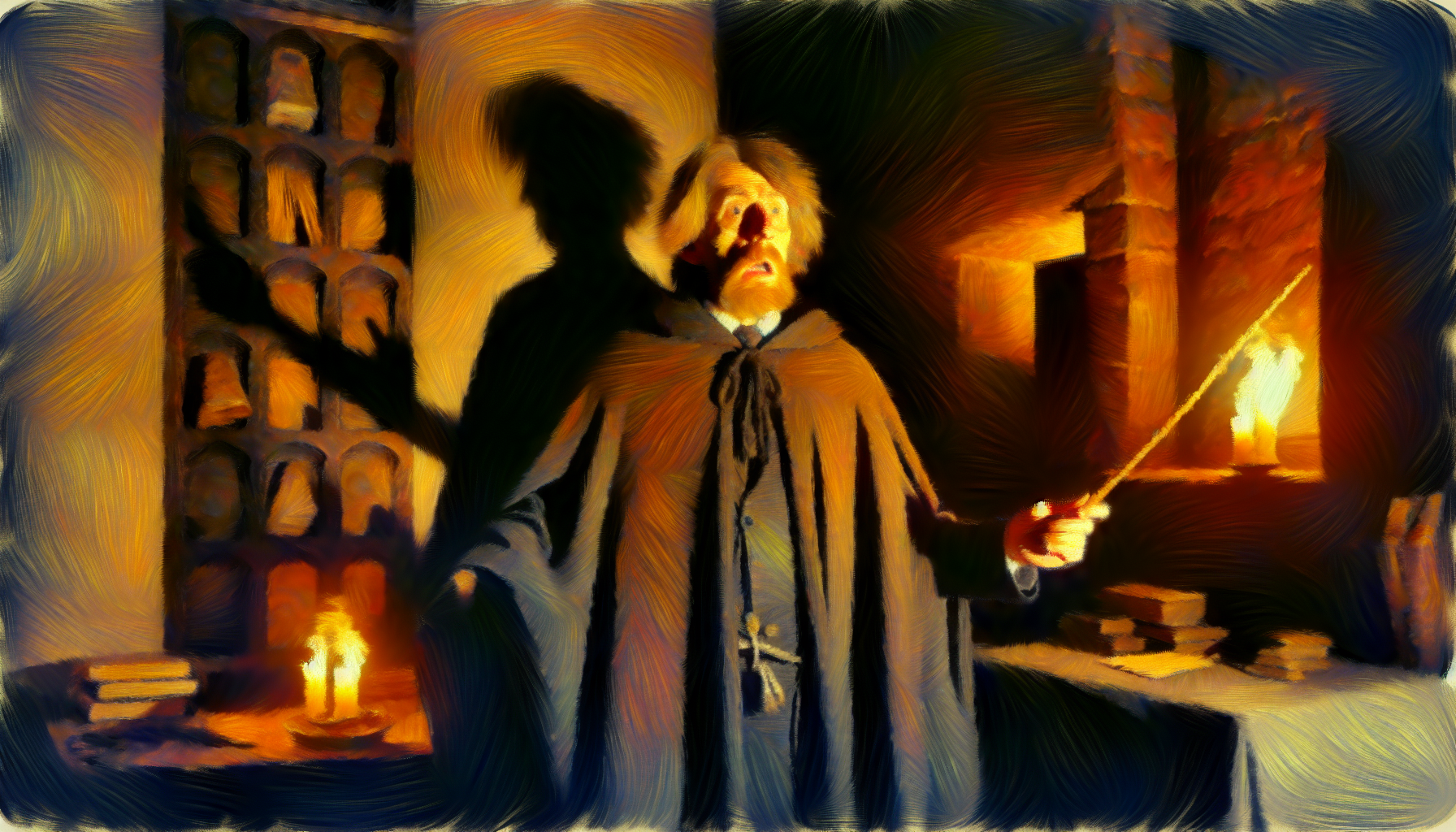
Understanding Wormtail’s Complex Character
Why Wormtail Was One Of The Most Powerful Wizards In Harry Potter is a topic often overshadowed by his perceived cowardice and treachery. Peter Pettigrew, known as Wormtail, embarked on a journey fraught with complexities that led him from the corridors of Hogwarts to the sinister depths of Voldemort’s inner circle. As a student at Hogwarts, Pettigrew was part of the infamous group known as the Marauders, alongside James Potter, Sirius Black, and Remus Lupin. Despite his initially timid and underconfident nature, he found comfort and identity within this circle of friends.
Peter Pettigrew’s transformation from a loyal friend to a formidable adversary is a tale of gradual change. Initially, he was wholly devoted to his friends, showcasing loyalty that would later morph into betrayal. It was during the First Wizarding War that Pettigrew started to drift further into the shadows, choosing to align himself with the rising power of Lord Voldemort. His decision was driven by a combination of fear, ambition, and a desire for self-preservation—traits that would define his actions throughout the series.
The exploration of Wormtail’s motivations and insecurities reveals a man plagued by feelings of inadequacy and a desperate need to belong. These insecurities made him susceptible to the influence of stronger personalities, as seen in his eventual submission to Voldemort. His motivations were rooted in the need for security and power, compensating for his lack of self-confidence and the validation he sought from formidable figures around him.
The role of fear and survival instincts in his decisions cannot be understated. Wormtail’s actions were often driven by a primal fear of death and a need to align with the side that seemed most likely to ensure his survival. This survival instinct, while often leading to morally questionable decisions, was a testament to his underlying cunning and adaptability—qualities that, in a twisted way, contributed to his power within the magical world.
The Magical Abilities of Peter Pettigrew
Peter Pettigrew’s skills in transfiguration are perhaps most famously demonstrated by his Animagus ability. He was able to transform into a rat, a skill he mastered alongside his friends to support Remus Lupin during his transformations. This ability to assume a form that aided in evasion and espionage highlights his resourcefulness and strategic thinking. The rat, a symbol of his slyness and ability to slip through cracks unnoticed, became synonymous with his character.
As a Death Eater, Wormtail displayed a mastery in the Dark Arts, which he used to serve Voldemort. His proficiency in these forbidden magics was not only a survival tool but also a means to gain favor with the Dark Lord. This mastery was particularly evident during the events leading to Voldemort’s resurrection, where Pettigrew played a critical role. His knowledge of complex magic, including the use of ancient spells and potions, was instrumental in returning Voldemort to his corporeal form.
Wormtail’s role in the resurrection of Voldemort through complex magic cannot be overstated. The ritual, which required great skill and nerve, involved the creation of a new body for Voldemort using dark and dangerous magic. This act, while treacherous, highlighted Pettigrew’s capability to perform highly advanced spells, marking him as a wizard of considerable power despite his cowardly reputation.
Instances of cleverness and cunning frequently emerged in Wormtail’s actions, underscoring his magical prowess. Whether it was his ability to remain undetected as Scabbers for years or to orchestrate the capture of key figures, Pettigrew’s cunning often proved to be a significant asset. These actions demonstrate that, while he may not have been the most honorable wizard, his capabilities were not to be underestimated.
Contributions to Voldemort’s Reign
Wormtail’s actions directly led to Voldemort’s return to power, solidifying his place in the annals of dark wizardry. By betraying the Potters and delivering Harry to Voldemort, Pettigrew set in motion the events that would ultimately lead to the Dark Lord’s resurgence. His betrayal was a pivotal moment in the series, emphasizing the critical role he played in facilitating Voldemort’s rise.
In the Death Eater hierarchy, Wormtail’s strategic importance was both a reflection of his loyalty and a testament to his influence. Though he often played the role of a sycophant, his ability to maneuver within the ranks of Voldemort’s followers showcased his understanding of power dynamics and his knack for self-preservation. He was a tool in the hands of Voldemort, but a tool that was indispensable for many key operations.
The significance of Wormtail’s role in key events like the capture of important characters further highlights his contributions to Voldemort’s reign. His cunning and resourcefulness were instrumental in orchestrating events such as the Triwizard Tournament’s manipulation and the capture of Harry and his friends. These actions not only advanced Voldemort’s agenda but also reinforced Wormtail’s effectiveness as a Death Eater.
Analysis of Wormtail’s loyalty and its impact on the wizarding world reveals a complex relationship with the concept of allegiance. His loyalty to Voldemort was primarily driven by fear, but it was this very fear that made him a powerful ally. By prioritizing self-preservation over morality, Wormtail’s choices had far-reaching implications, shaping the events of the series in significant ways.
The Moral Complexity of Wormtail
The moral dilemmas faced by Wormtail throughout the series present a fascinating study in contrasts. Despite his reputation as a coward, there were moments when Pettigrew exhibited bravery, albeit often in service of his own interests. These moments of bravery, though self-serving, reveal the layers of his character beyond the simplistic label of traitor.
The contrast between his perceived cowardice and moments of bravery is a recurring theme in Wormtail’s story. While his actions were often driven by fear, there were instances where he displayed a willingness to take risks, particularly when his own survival was at stake. This duality captures the essence of his character—a man torn between his fears and his desire for power.
The themes of betrayal and redemption in Wormtail’s character arc are central to understanding his role in the series. His betrayal of the Potters was a defining moment, yet his later actions reveal a complex interplay of guilt and self-interest. Wormtail’s ultimate sacrifice, although not born of noble intentions, served as a form of redemption, demonstrating that even the most flawed characters are capable of change.
Wormtail’s ultimate sacrifice and its implications add a poignant layer to his story. When faced with the choice between loyalty to Voldemort and aiding Harry Potter, Pettigrew’s moment of hesitation cost him his life. This act, though unintended, was a final acknowledgment of the friendship he once cherished, offering a glimpse of redemption in a life marked by treachery.
Lessons from Wormtail’s Story
The importance of understanding personal motivations in character development is a key lesson from Wormtail’s story. His journey illustrates how deeply ingrained insecurities and desires can shape one’s actions and choices. By delving into his motivations, readers gain insight into the complexities of human behavior and the factors that drive individuals to make certain decisions.
The dangers of underestimating individuals based on initial impressions are highlighted through Wormtail’s character. Despite being perceived as weak and cowardly, Pettigrew’s actions often had significant consequences. This serves as a reminder that appearances can be deceiving, and even those deemed powerless can wield influence in unexpected ways.
Insights into the balance of power and weakness in one’s personality are evident in Wormtail’s story. His struggles with loyalty, fear, and ambition showcase the intricate interplay of these forces within the human psyche. By examining this balance, readers gain a deeper understanding of how power and weakness coexist within individuals, shaping their actions and destinies.
Takeaways about loyalty, fear, and the human condition emerge from Wormtail’s narrative. His story is a testament to the complexities of loyalty, both to oneself and to others, and the ways in which fear can drive individuals to act against their better judgment. By exploring these themes, readers are encouraged to reflect on their own motivations and the impact of their choices on the world around them.