5 Bad Wizards That Weren’t From Slytherin

Understanding House Bias in the Wizarding World
Bad Wizards That Weren’t From Slytherin are not just a figment of imagination. Many times, when we think of dark wizards or witches, our minds automatically point to Slytherin House. The misconception that all evil stems from Slytherin has perpetuated over years, unfairly branding the house and its members as inherently bad. The truth is, Slytherin values ambition, cunning, and resourcefulness—traits that can lead to both greatness and darkness. The house itself does not inherently breed evil; it is the choices of individuals that define their paths.
It is crucial to recognize that evil is not confined to one house. Wizards and witches, regardless of their house affiliation, possess the capacity for both great good and profound evil. The history of Hogwarts and the broader wizarding world is replete with examples where individuals from various houses have succumbed to the temptations of power and darkness.
House biases significantly influence wizarding society and reinforce stereotypes that can lead to prejudice. These biases can affect how students perceive each other, how they are taught, and even how they interact in adulthood. This division can sometimes obscure the real sources of conflict and prevent cooperation among the houses.
Notable examples abound of individuals who have chosen dark paths despite their houses’ reputations for bravery, intelligence, or loyalty. Peter Pettigrew, a Gryffindor known for his cowardice, betrayed his closest friends. Quirinus Quirrell, a Ravenclaw, joined forces with Voldemort in his quest for power. Gellert Grindelwald, although not from Hogwarts, shared an early bond with a Gryffindor, Albus Dumbledore, yet pursued a dark agenda. Dolores Umbridge, another Ravenclaw, enforced oppressive measures at Hogwarts under the guise of order and discipline.
Peter Pettigrew: The Gryffindor Betrayer
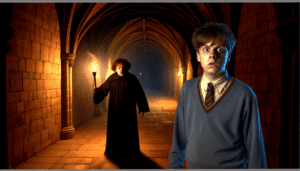
Peter Pettigrew was a Gryffindor, a house renowned for bravery and courage. Yet, he defied these characteristics. During his years at Hogwarts, Pettigrew was overshadowed by his more charismatic friends—James Potter, Sirius Black, and Remus Lupin. He was always the least remarkable of the group, which may have sown the seeds of insecurity and a need for validation.
Pettigrew’s most infamous act was the betrayal of James and Lily Potter. As their Secret-Keeper, he was entrusted with the location of their safe house, a secret Pettigrew revealed to Voldemort. This treachery led to their deaths and set off a chain of events that would affect the entire wizarding world. His need for survival and fear of Voldemort’s wrath outweighed his loyalty to friends.
Pettigrew’s actions directly contributed to Voldemort’s rise to power. By betraying the Potters, he removed one of Voldemort’s greatest threats. His cowardice and willingness to serve evil for protection demonstrate that even those from houses known for nobility can fall prey to darker impulses.
The complexity of Pettigrew’s character lies in his blend of loyalty and cowardice. While he was loyal to his friends during their school years, his fear overtook any sense of bravery. Pettigrew’s life illustrates the peril when the need for self-preservation becomes paramount, and he exemplifies how Gryffindor traits can be twisted.
The impact of Pettigrew’s choices rippled through the wizarding world. His betrayal not only caused the death of the Potters but also led to the wrongful imprisonment of Sirius Black and the orphaning of Harry Potter. Pettigrew shows us that betrayal can come from the most unexpected sources, and no house is immune.
Quirinus Quirrell: The Opportunistic Ravenclaw
Quirinus Quirrell was a Ravenclaw, a house celebrated for wisdom and intellectual prowess. His academic achievements were numerous, and he was known for his sharp mind and curiosity. However, it was this very curiosity that led him down a perilous road.
Initially a professor at Hogwarts, Quirrell’s journey to the dark side began with his quest for knowledge and recognition. He traveled extensively, seeking to learn more about obscure and dark magic. It was during these travels that he encountered Voldemort and became seduced by the Dark Lord’s promises of power and glory.
Quirrell played a pivotal role in the plot to steal the Philosopher’s Stone, which could grant immortality. This dangerous quest was driven by Quirrell’s ambition to prove himself and gain power. He allowed himself to become a vessel for Voldemort, showcasing how even the brightest minds can be manipulated by desire.
Fear played a significant role in Quirrell’s decisions. He was afraid of Voldemort, yes, but he was also terrified of obscurity and failure. Quirrell’s motivations were a mix of ambition, fear, and a desire for greatness, leading him to make choices that ultimately resulted in his downfall.
The consequences of Quirrell’s alliance with darkness were severe. His actions endangered the lives of many at Hogwarts, including Harry Potter. Quirrell’s story is a cautionary tale about the dangers of unchecked ambition and the vulnerability of even the strongest minds to corruption.
Gellert Grindelwald: The Ambitious Durmstrang Student
Gellert Grindelwald’s story is unique as he was not educated at Hogwarts, thus lacking direct association with any of its houses. He attended Durmstrang Institute, known for its acceptance of the Dark Arts, which perhaps influenced his later actions.
In his youth, Grindelwald formed a deep friendship with Albus Dumbledore. The two shared grand ideas about wizarding supremacy and the greater good. However, while Dumbledore eventually realized the danger of their ambitions, Grindelwald pursued them with fervor.
Grindelwald’s ideology centered on wizard dominance over Muggles, believing that those with magical ability should rule for the “greater good.” His actions and beliefs led to a rise in power that threatened the very fabric of the wizarding world.
Grindelwald’s reign of terror had a profound impact on society, creating fear and division. His power grew until he was ultimately defeated by Dumbledore in a legendary duel. This defeat was not only a personal loss for Grindelwald but a turning point for the wizarding world, demonstrating the power of love and redemption.
The lessons learned from Grindelwald’s story are many. They highlight the dangers of unchecked ambition and the importance of standing against tyrannical power. His defeat by Dumbledore also serves as a reminder of the power of friendship and the strength found in choosing the right path, despite past mistakes.
Dolores Umbridge: The Power-Hungry Ravenclaw
Dolores Umbridge’s story is one of a Ravenclaw who used her intellect not for wisdom, but for control. Her career within the Ministry of Magic was marked by ambition and a ruthless desire for power. She climbed the ranks by aligning with influential figures and enforcing policies that increased her authority.
As a Defense Against the Dark Arts teacher at Hogwarts, Umbridge’s methods were oppressive and cruel. She imposed strict rules and punishments, stifling students’ freedom and creativity. Her tenure at Hogwarts is remembered for the fear and resentment it incited among both students and staff.
Umbridge’s quest for control and authority was driven by her belief in pure-blood supremacy and her disdain for those she deemed inferior. Her enforcement of oppressive rules was not just about order but about instilling fear and obedience.
The legacy of Umbridge’s influence extended beyond her time at Hogwarts. Her actions reflected a dangerous ideology that threatened the values of equality and justice within the wizarding community. Umbridge serves as a reminder of how power can corrupt and the importance of vigilance against tyranny.
In conclusion, the presence of Bad Wizards That Weren’t From Slytherin underscores the complexity of character and choices in the wizarding world. It challenges the stereotype of Slytherin as the sole source of evil and reminds us that darkness can stem from any house. The stories of Pettigrew, Quirrell, Grindelwald, and Umbridge offer valuable lessons on the perils of ambition, fear, and the misuse of power. Ultimately, they highlight the importance of individual choice and the impact it can have on the world around us.